These nine ideas run from a free playlist and potluck spread to a hired musician or full tea service, with most falling somewhere you can assemble from a store run and an afternoon of prep.
The right choice depends on whether your guest of honor still moves easily through a crowd or needs a seat, a clear path, and a party that ends by four o’clock.
A single portable speaker fills most living rooms; two spaced apart keep the volume low enough for conversation.
1. Music from the Past
A playlist built from the birthday person’s teens and twenties does something no decoration can.
Songs carry memory in a way that reaches guests of every age, and the right track can pull stories out of people who rarely speak up.
Start with a streaming service’s decade filters, then narrow by the years they turned fifteen to twenty-five. Ask a sibling or old friend for the names they danced to, not just the hits you remember.
A single portable speaker fills most living rooms; two spaced apart keep the volume low enough for conversation.
This works best when the guest list spans generations. Younger relatives hear the music fresh, and older ones get to explain.
2. Outdoor Family Picnic
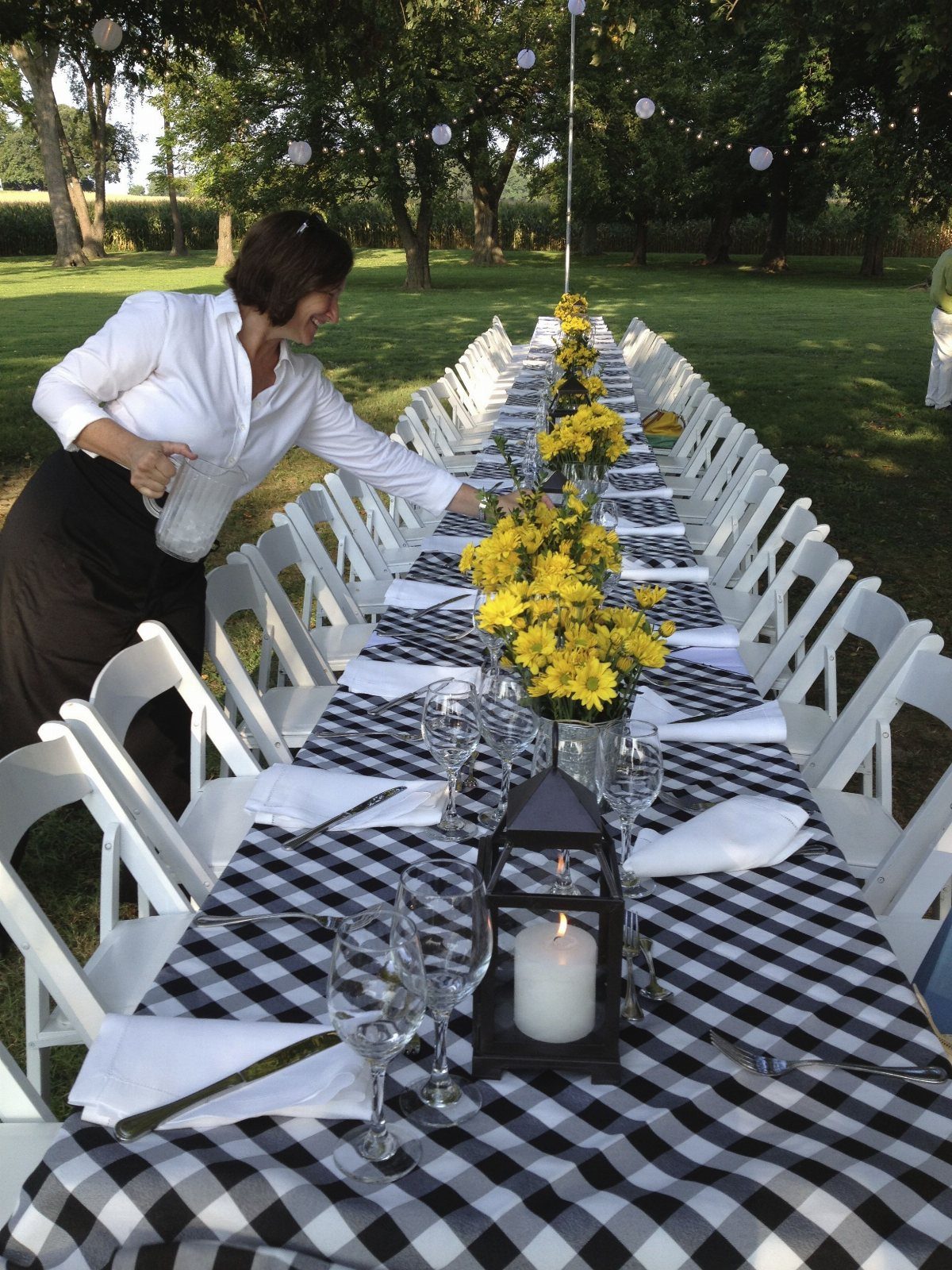
Let everyone bring a dish instead of handling the whole menu yourself. Potluck spreads the cost and the work across the group, which matters when you’re feeding three or four generations.
Assign dishes by category so you don’t end up with six pasta salads. One person handles a main protein, another brings bread, someone else dessert.
Paper plates and compostable cutlery mean no one washes dishes. Lawn games like cornhole or a simple ring toss keep children occupied while adults talk.
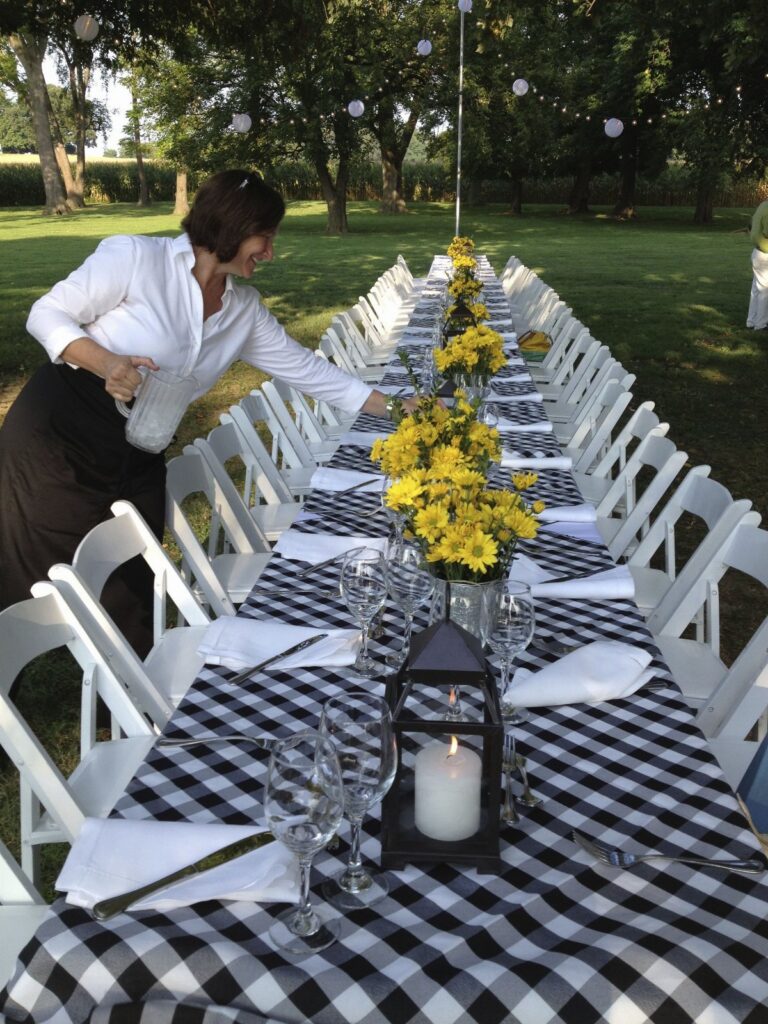
Rain is the obvious risk. A rented pop-up tent is worth it if shade matters, or move the same cloth indoors across a dining table.
3. Hire an Entertainer
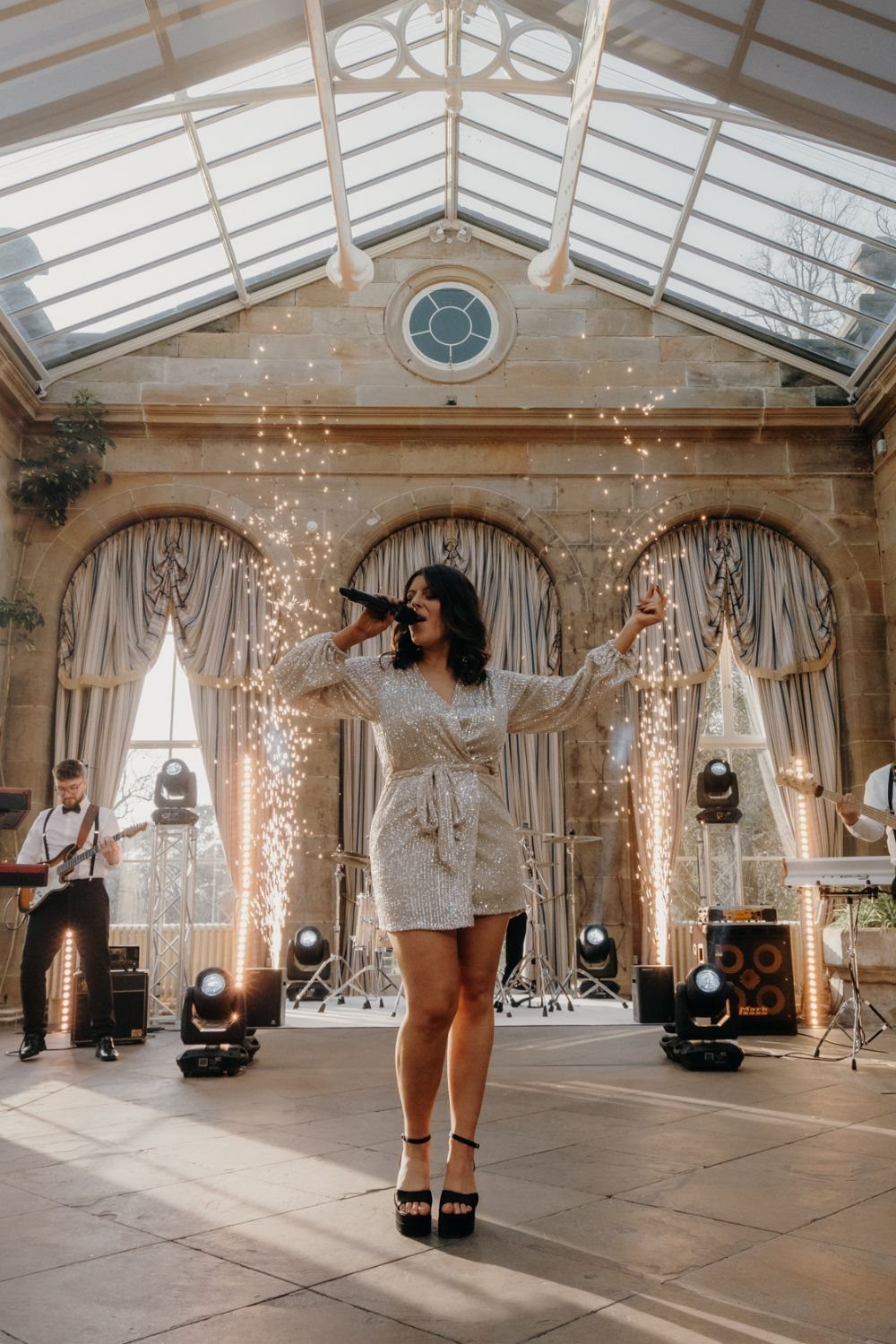
A performer gives the party structure without you playing host every minute. The singer with sparklers behind her is one version; a close-up magician working the crowd during drinks is another, and often cheaper.
Keep the set short enough that nobody gets worn out. Longer and guests tire, shorter and it feels like an interruption.
A local musician playing standards costs more than a magician or juggler for the same slot. Book early, especially in spring and fall when wedding season competes for the same people.
This trades some intimacy for energy. If your group is small and already close, the money might go further toward a nicer meal.
4. Pass the Parcel
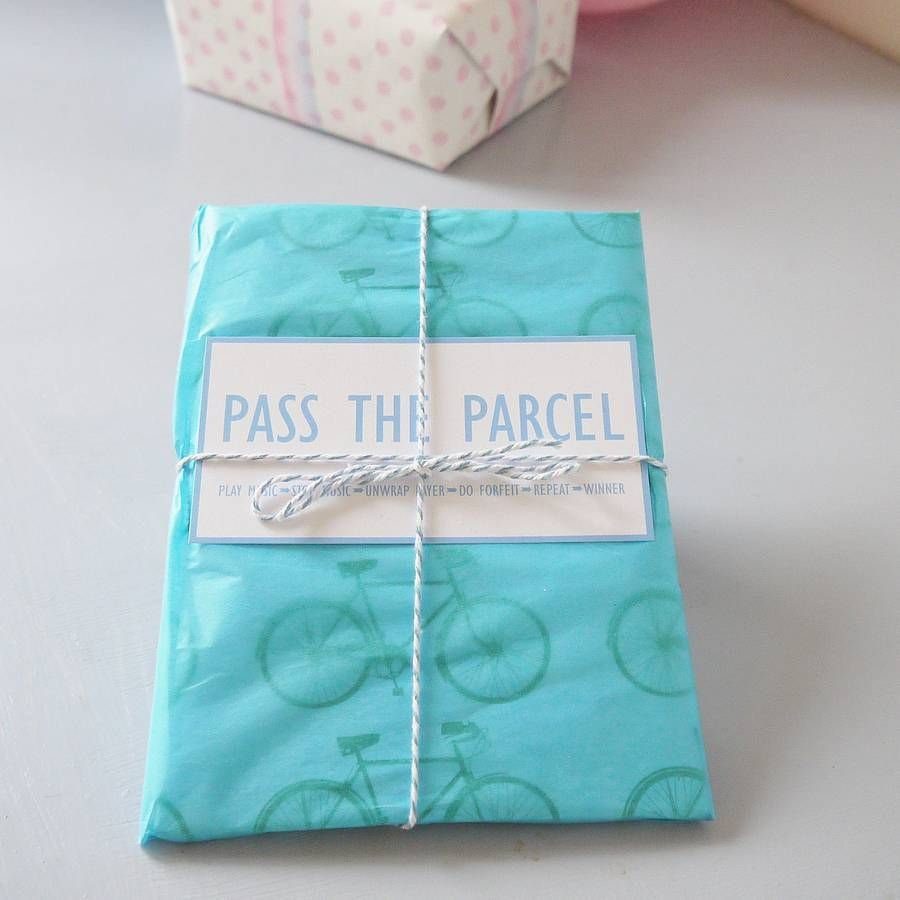
Pass the parcel sounds childish until you fill the layers with things adults actually want. Lottery tickets, miniature liquor bottles, gift cards for coffee.
The final prize can be a framed photo or a small plant.
Wrap one item per layer, alternating thin tissue with heavier paper so the unwrapping feels different each round. Music controls the pace; when it stops, the person holding the parcel removes one layer.
A phone with a playlist and a willing DJ handles the soundtrack. Ten to fifteen layers covers most groups, and the game fills a good stretch of the party without dragging on.
Small children need supervision or they tear straight through. Teenagers pretend to hate it until the music starts.
5. Photo Display
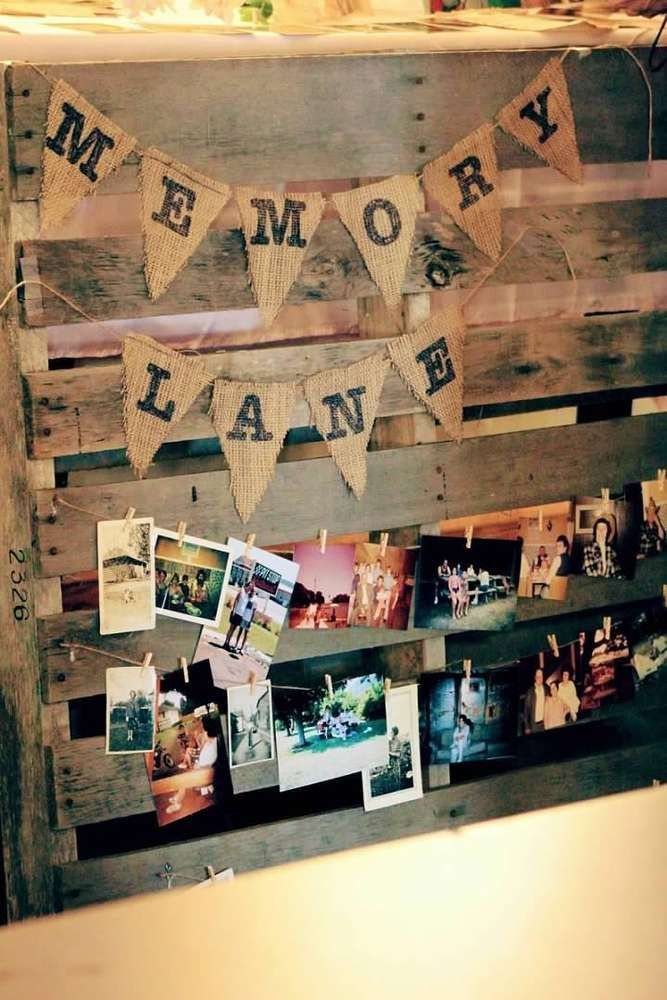
Give guests something to do with their hands while they talk, which matters more than how fancy the display looks. Photos break the ice better than any game.
Gather forty to sixty images spanning the full life, not just the early years. Label the back of each with the year and who’s in it, in pencil.
String and clips let people rearrange; a foam board with photo corners keeps order fixed. Set out near the food, not in a separate room where it gets ignored.
This needs lead time. Scanning and printing from family phones needs real lead time if you’re gathering from scattered relatives.
Start early.
6. Indoor Afternoon Tea
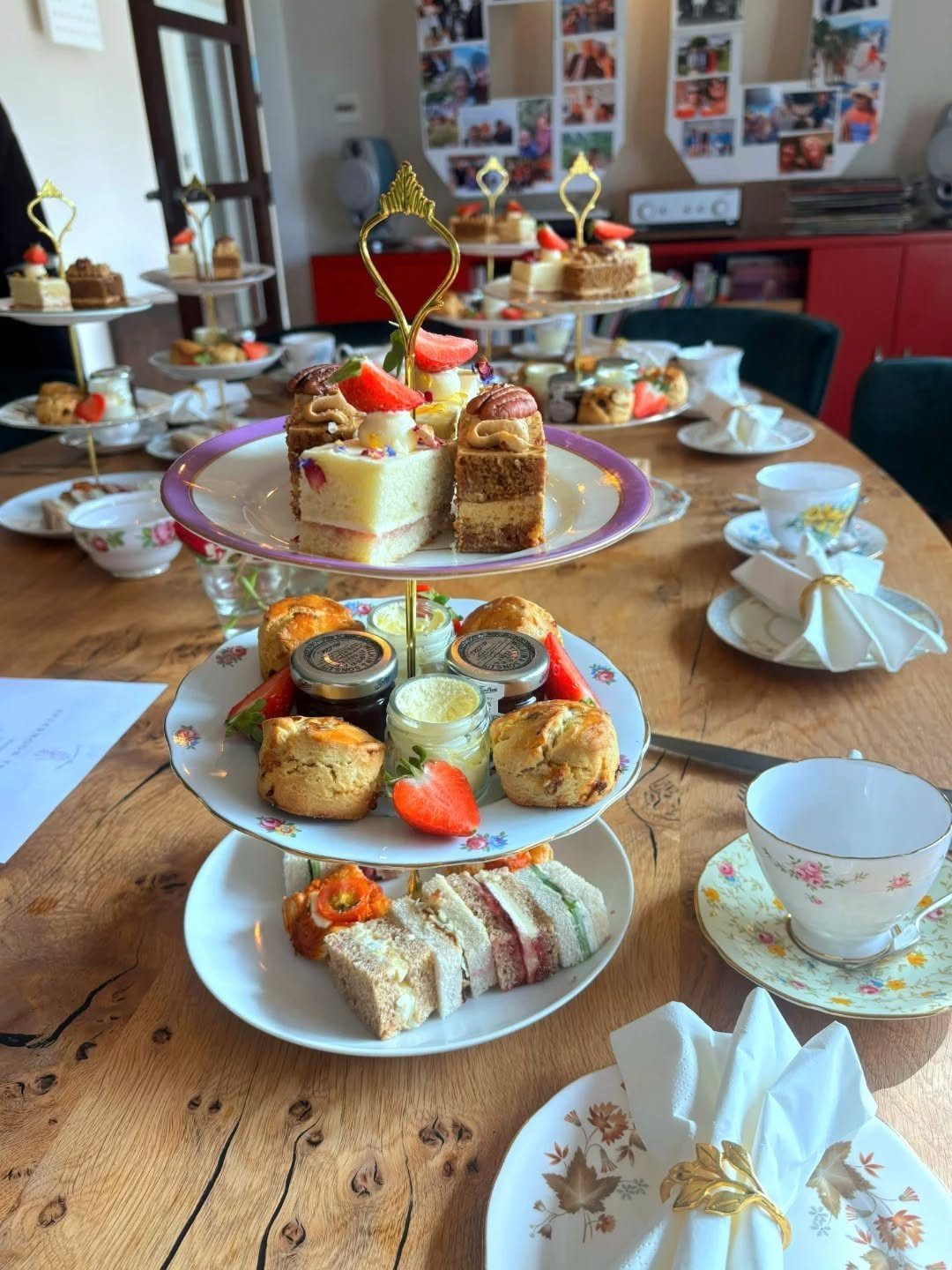
A tiered stand with sandwiches and scones is what guests remember, whether it comes from a caterer or your own kitchen.
You can build the same spread yourself for a fraction of the catering price, or hire it out if the budget allows.
For DIY, bake one centerpiece cake and buy the rest: finger sandwiches cut small, scones from a bakery, jam and clotted cream in small dishes. The three-tier stand matters more than homemade pastry.
Borrow or thrift one, or stack cake plates with matching teacups below.
Keep the tea selection simple: one black, one herbal, one decaf. Music in the background should be quiet enough to talk over.
This suits guests who want to sit, eat, and leave by four o’clock.
7. Memory Sharing
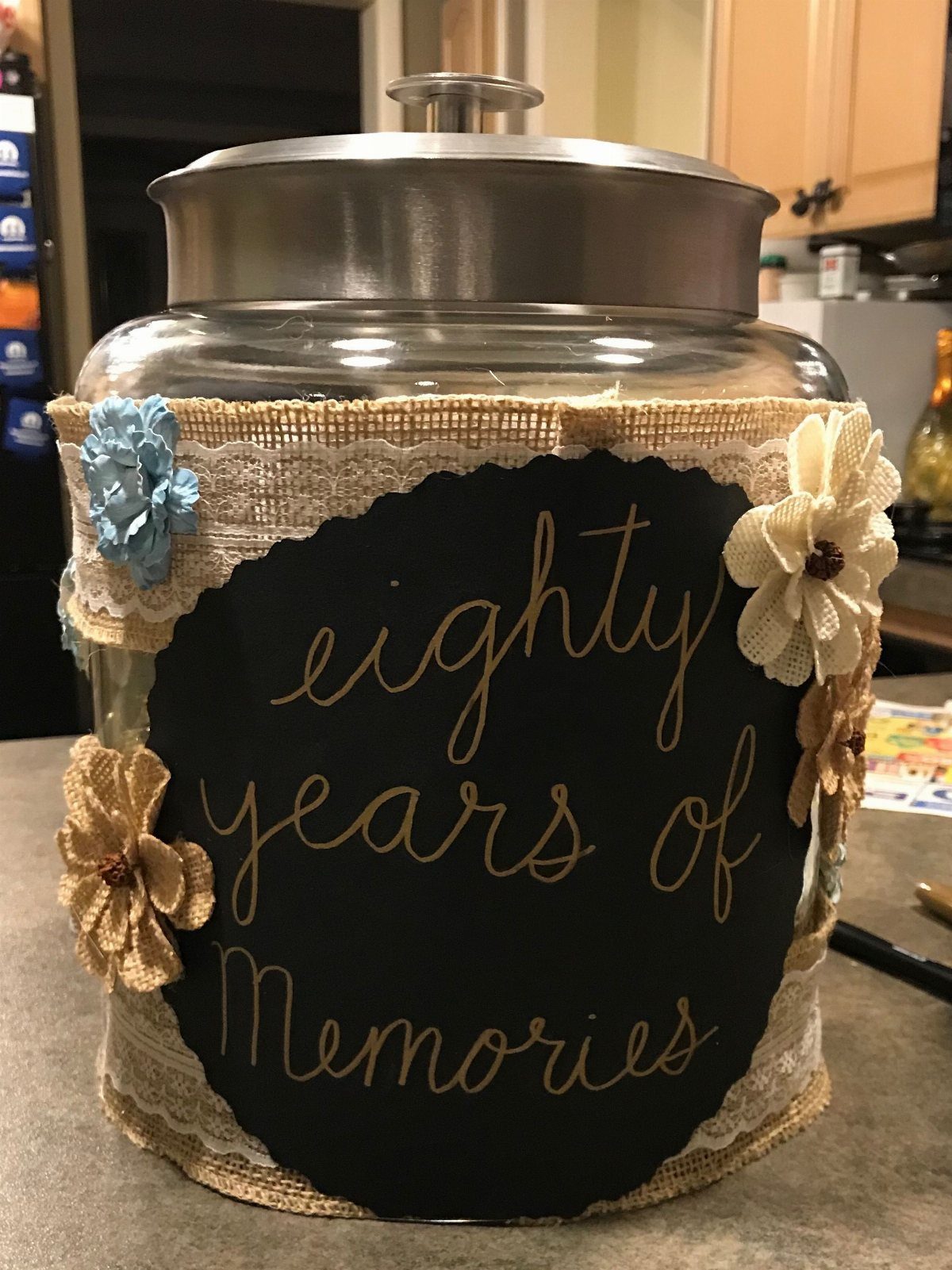
A memory jar gives guests a way to speak to the guest of honor without waiting for a microphone or a toast.
Slips of paper and a few pens on each table let people write moments as they remember them, then fold and drop them in.
A clean glass cylinder works just as well as anything fancier, and the notes inside matter more than the container. Label it with the year and set it near the entrance so guests see it on arrival.
Reading aloud works for a small group; for more than twenty, ask a grandchild to pull and read a handful during cake. The birthday person keeps every slip afterward.
This suits hosts who worry the guest of honor will sit through speeches rather than take part in them.
8. Year You Were Born Placemat Cards
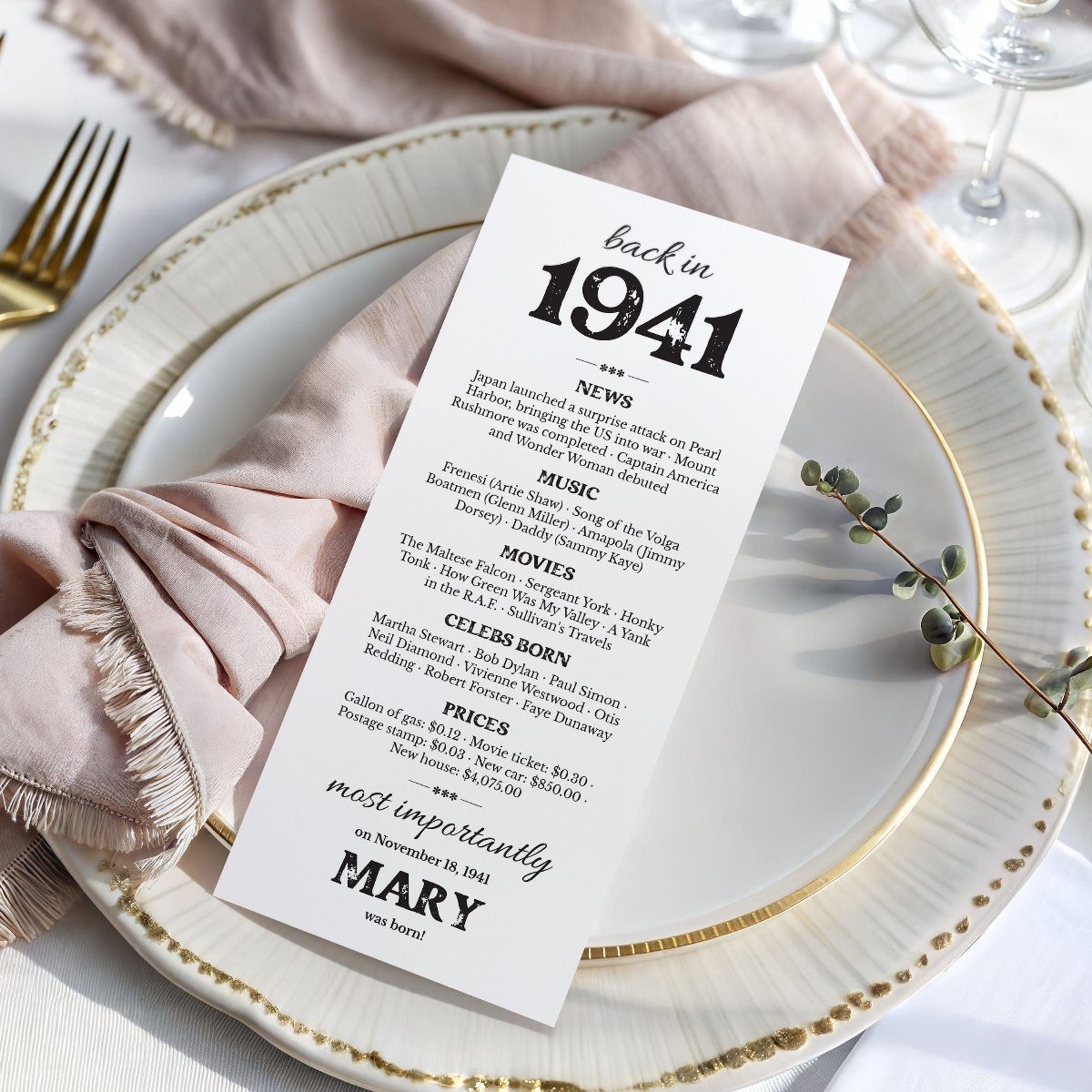
Placemat cards printed with headlines, hit songs, and grocery prices from the guest of honor’s birth year turn each seat into a small time capsule.
The maker sends a proof quickly after ordering, which I appreciate; it gives time to catch a typo in the birth date or swap a fact that does not suit the guest of honor’s taste.
I would order one per place setting rather than trying to share. Guests take them home, and at this age many attendees are old enough to remember the year themselves; the card becomes a conversation piece across generations.
A heavier cardstock holds up through a full meal.
9. Welcome Sign and Balloon Arch
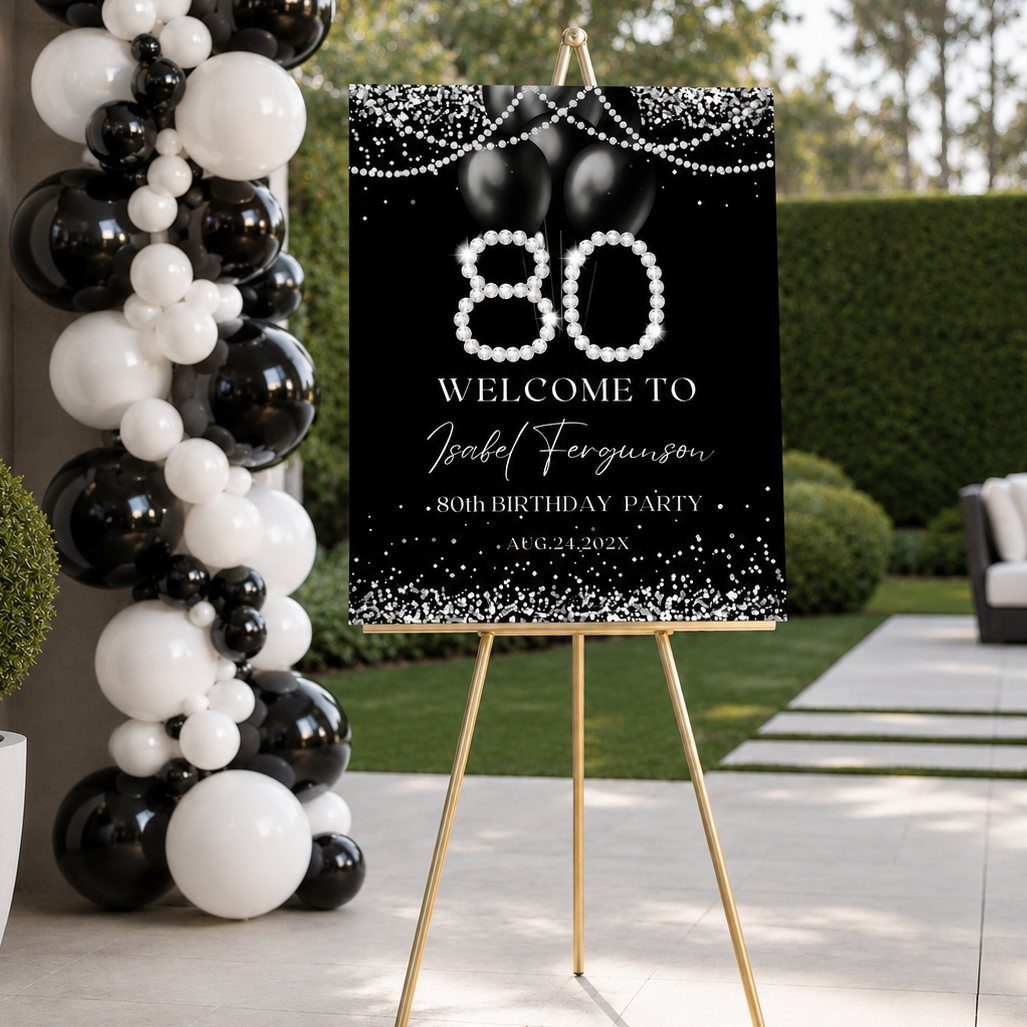
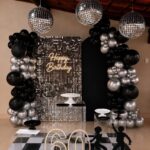
A welcome sign at the entry lets late arrivals slip in without asking directions, and the balloon arch gives them something to photograph before they even reach the food.
Black and white keeps it dignified; pearls on the sign pick up the same tone without adding another color to manage.
Organic style means varied sizes clustered rather than a uniform spiral, which reads more like a flower garden and less like a car lot opening.
That shape is more forgiving if a few balloons deflate overnight, which they will in summer heat. I would build it the morning of, or pay a local installer to arrive early and troubleshoot.
The sign itself can be foam board from a print shop; the pearls are stick-on from a craft store and add only a few dollars.
10. Custom Year-Themed Cake
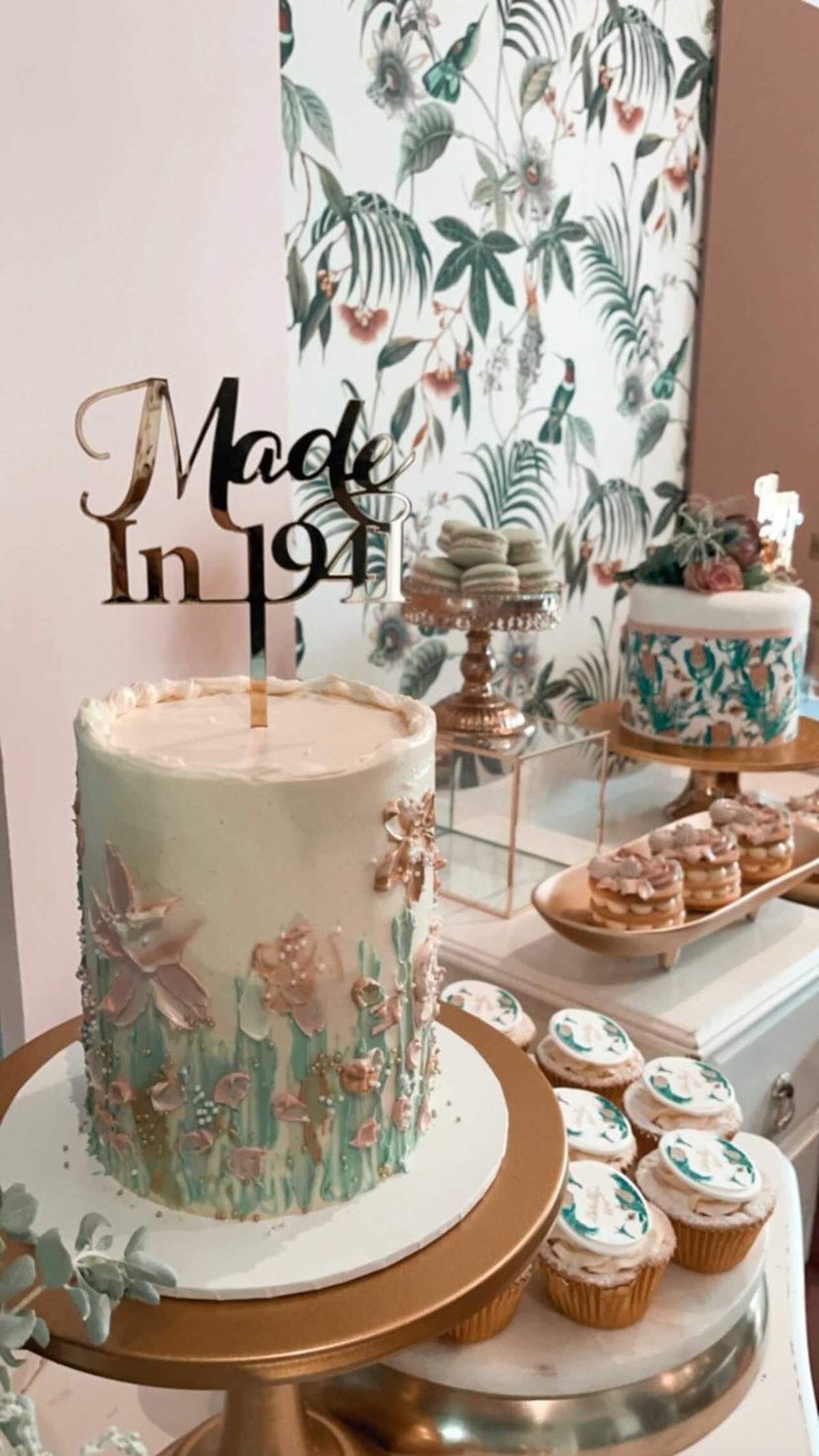
A cake topper reading "Made In 1941" frames the whole dessert table around the guest of honor’s origin story rather than just the number.
The green floral frosting is piped buttercream, not fondant, which I prefer for an older crowd; the texture is softer to cut and the flavor reads as homemade even when it is not.
I would confirm the cake height before ordering; a tall tier needs a longer stake than a single layer.
Cupcakes and macarons at the base stretch one cake to feed more people without the cost of a second full tier.
11. Milestone Birthday Sash
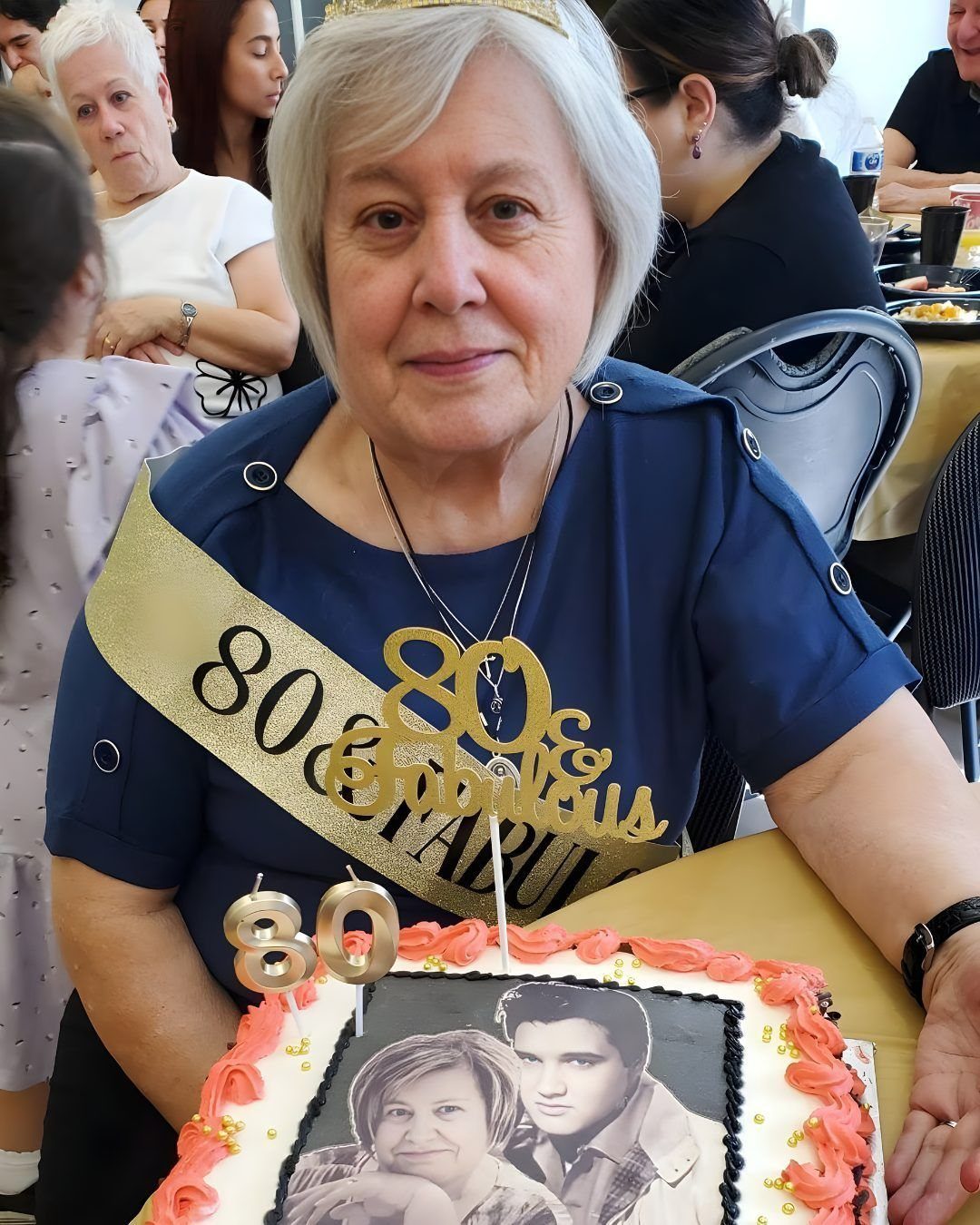
A sash lets the guest of honor wear the milestone instead of just blowing it out on cake.
The gold ’80 & FABULOUS’ is satin-width ribbon, not the cheap plastic width that reads costume; the difference is visible from across the room.
I would hand it to her before photos begin, not make her dig for it in a gift bag. The tiara is a matching set, and the combination works because neither piece is large enough to fight the other.
One alone would still register; both together say "we planned this."
I have seen hosts skip the tiara when the celebrant is not a hat person; the sash alone still photographs clearly.
12. Teacup and Pearl Centerpiece
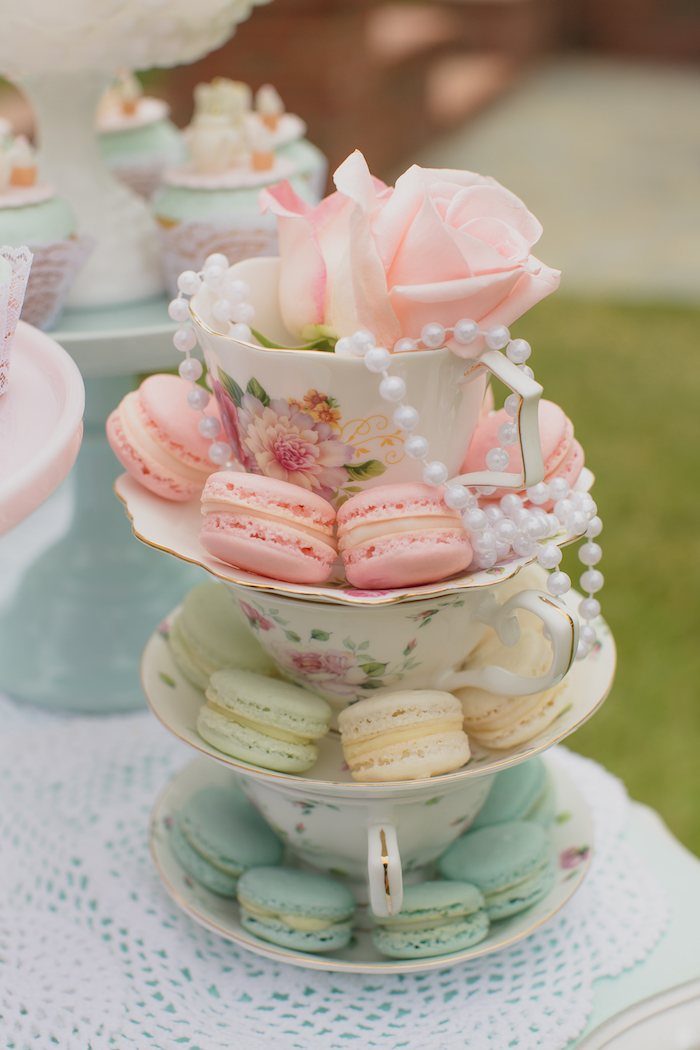
Stacks of mismatched floral teacups make a centerpiece that reads as collected over years, even when the set is bought in a weekend.
The pearl strand draped across the top cup is the detail that pulls it from yard sale to party; it costs next to nothing at a craft store and takes no time to arrange.
Macarons in pink and blue fill the cups instead of flowers, which I prefer for a summer outdoor table; they do not wilt, and guests eat them.
A single fresh rose on top is enough live element without the water management of a full floral arrangement.
I would buy saucers separately if the teacup lot does not include them; the stack needs a base per cup for stability. Lace underneath catches crumbs and goes in the wash.
Planning the Celebration
Start with what the birthday person actually wants, not what the guest list expects. A quiet lunch with two grandchildren beats a crowded hall if loud noise or standing for long periods has become hard.
Check in early about energy levels, hearing, and how late they stay alert. An afternoon event ends before evening fatigue sets in.
A seated dinner with courses served to the table keeps someone comfortable who can no longer manage a buffet line.
Build in escape routes. A short party with a clear end time spares them from flagging in front of guests.
A comfortable chair placed prominently, not off to the side, lets them participate without standing.
Choosing a Venue
Count actual bodies, not Facebook maybes, before you commit to a space. A room that holds fifty feels empty with twenty; a space meant for thirty becomes impassable with forty-five.
Parking distance matters more at eighty than at forty. Drop-off at the door, not a hike from the lot, keeps arrival from exhausting the guest of honor before the party starts.
Look for level entry, wide doorways, and restrooms on the same floor as the event. A single step at the entrance blocks a walker or wheelchair completely.
Elevators break; ground-floor rooms remove that gamble.
For a home party, move furniture to create clear paths wider than a walker. Remove small rugs that slide or catch.
The prettiest room means nothing if they cannot get to the cake.
Frequently Asked Questions
What do you do for an 80th birthday party?
Build the party around what the birthday person can still enjoy comfortably. An afternoon event with seated food, clear paths for walkers, and a set end time keeps energy up.
Music from their teens and twenties, a memory jar for guests to write stories, and a photo display spanning their full life give the celebration personal meaning without exhausting them.
What is the color for turning 80?
No official color exists, though black and white with pearl accents is a combination that reads dignified without reading funeral.
A palette of deep purple, silver, and white photographs cleanly on welcome signs and balloon arches without fighting with whatever else is on the table. Gold on a satin sash also registers clearly across a room.